A wedding dress is not just fabric and lace, but an architectural design capable of transforming the perception of proportions. In 2026, the bridal industry finally abandoned universal standards in favor of a personalized approach. Visual correction of the figure has become a basic skill of every bride: a competent cut, strategically placed accents and an informed choice of material density allow you to gently level out the nuances that seem problematic and bring to the fore the natural advantages.
/span>As Coco Chanel once remarked:
"A dress should follow the curves of the body, but not try to alter it."
/span>Modern wedding fashion develops this idea, offering not a disguise, but a harmonious balance of lines, where every detail works for optical balance.
 |
 |
|
|
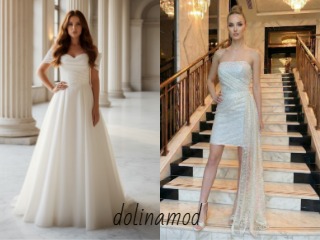
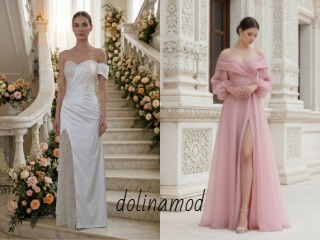
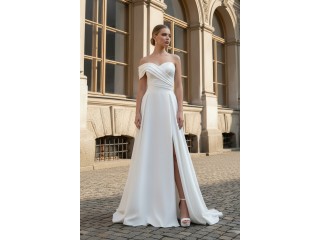
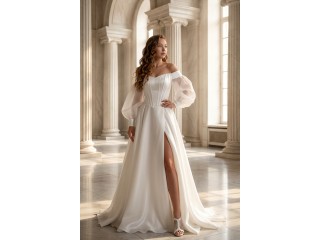
Celesta MS-1237 |
Annora MS-1224 |
|
| Learn more | Learn more |
Visual correction mechanisms in wedding cut
trong>Before choosing a model, it is important to understand how visual perception works:
- Vertical lengthens, horizontal expands: seams, draperies, rows of buttons or lace stripes direct the gaze upward or sideways.
- The cut line sets the rhythm: a high waist stretches height, a low waist shortens legs, a natural waist creates a proportional center.
- Density and texture control volume: matte crepe conceals the relief, smooth chiffon fits, structural mikado holds its shape without weighing down the silhouette.
- The focus area redirects attention: A plunging neckline, an open back, accentuated wrists or a graceful train make the eye ignore other areas.
Styles of wedding dresses: a detailed analysied analysis
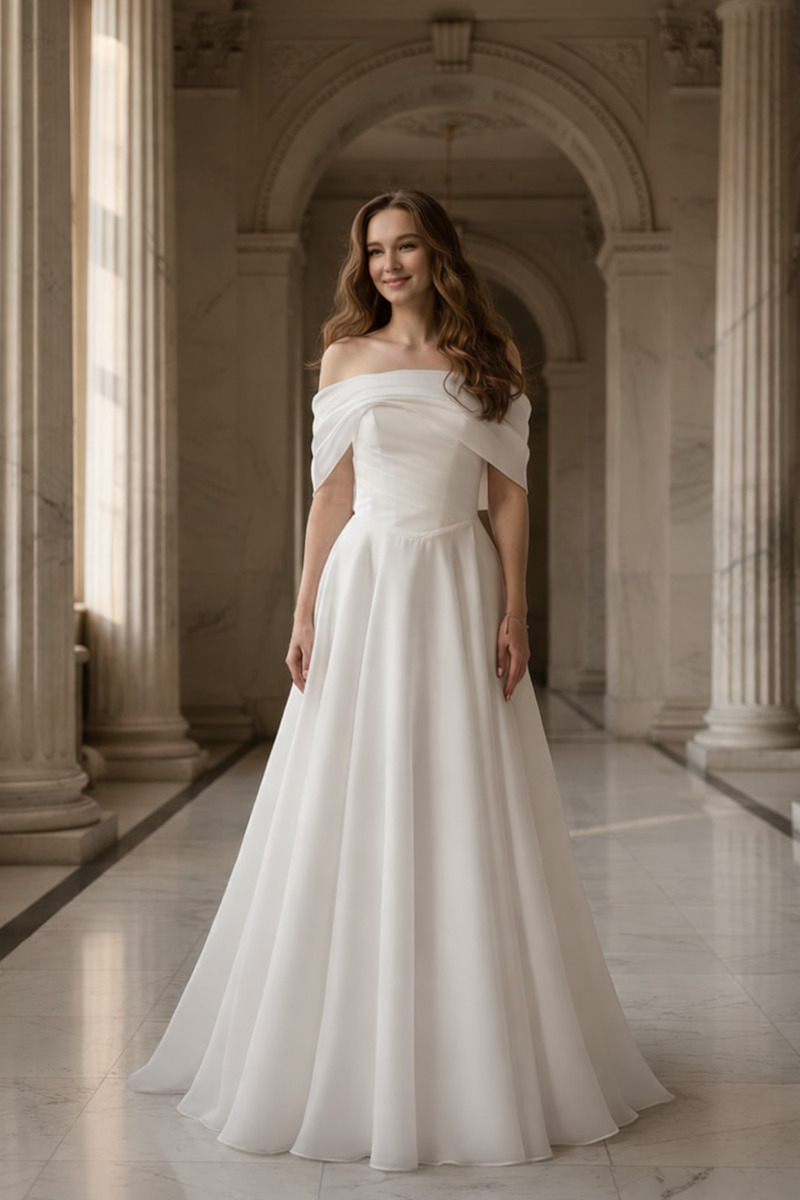
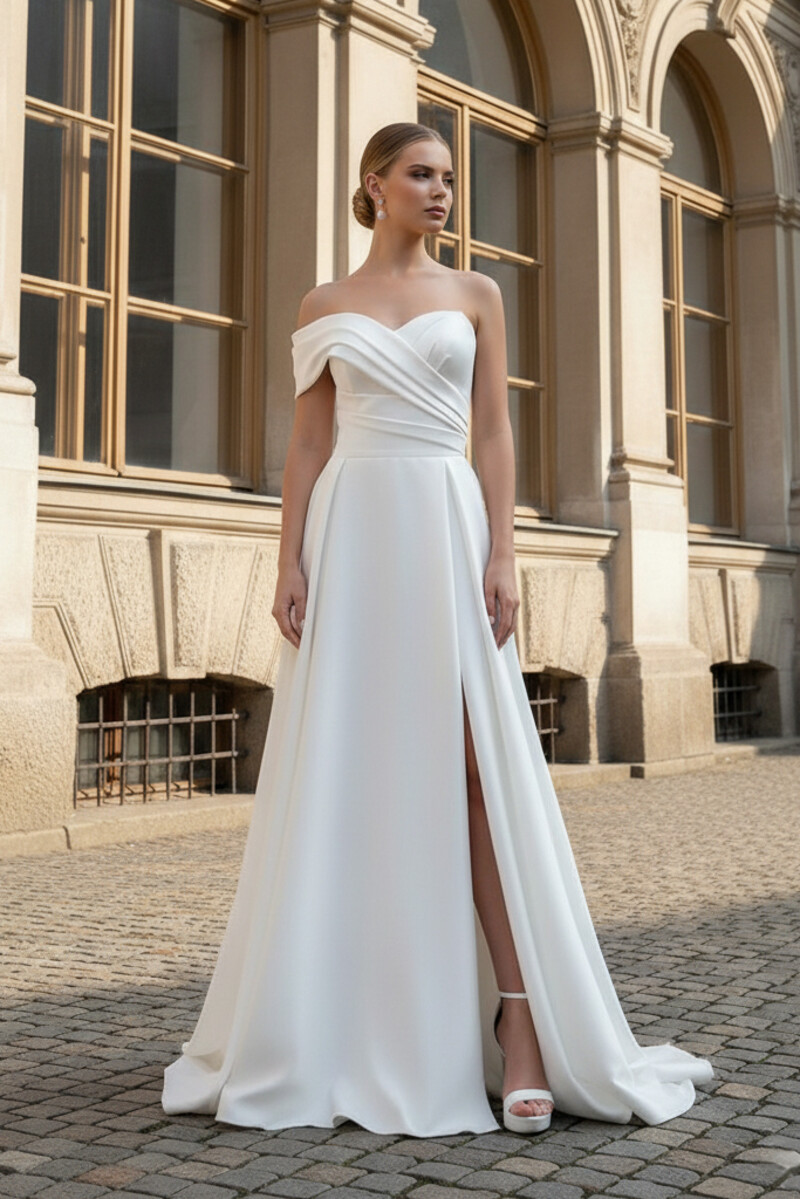
- A-silhouette is the gold standard of balance. It expands from the waist or hips, creating a smooth trapeze. Gently hides the fullness of the legs, abdomen and pelvis, emphasizes the waist without rigid tightening. Suitable for "pear", "apple" and rectangle. Works on any length and fabric.
- Empire (high waist) - the cut line runs just under the breast. Visually lengthens the legs, masks the stomach and hips, accentuates the decollete area. Ideal for pregnant women, girls with a soft body relief and those who appreciate comfort. It requires high-quality internal support in order not to "leak" down.
- Ball Gown (princess) - a full skirt based on a corset. Creates a contrast between a narrow top and a voluminous bottom, visually narrows the waist and hips. It hides massive legs, pelvic features, and allows you to hide asymmetry. It is important to choose a corset with soft bones and a breathable lining, otherwise the silhouette will become heavy.
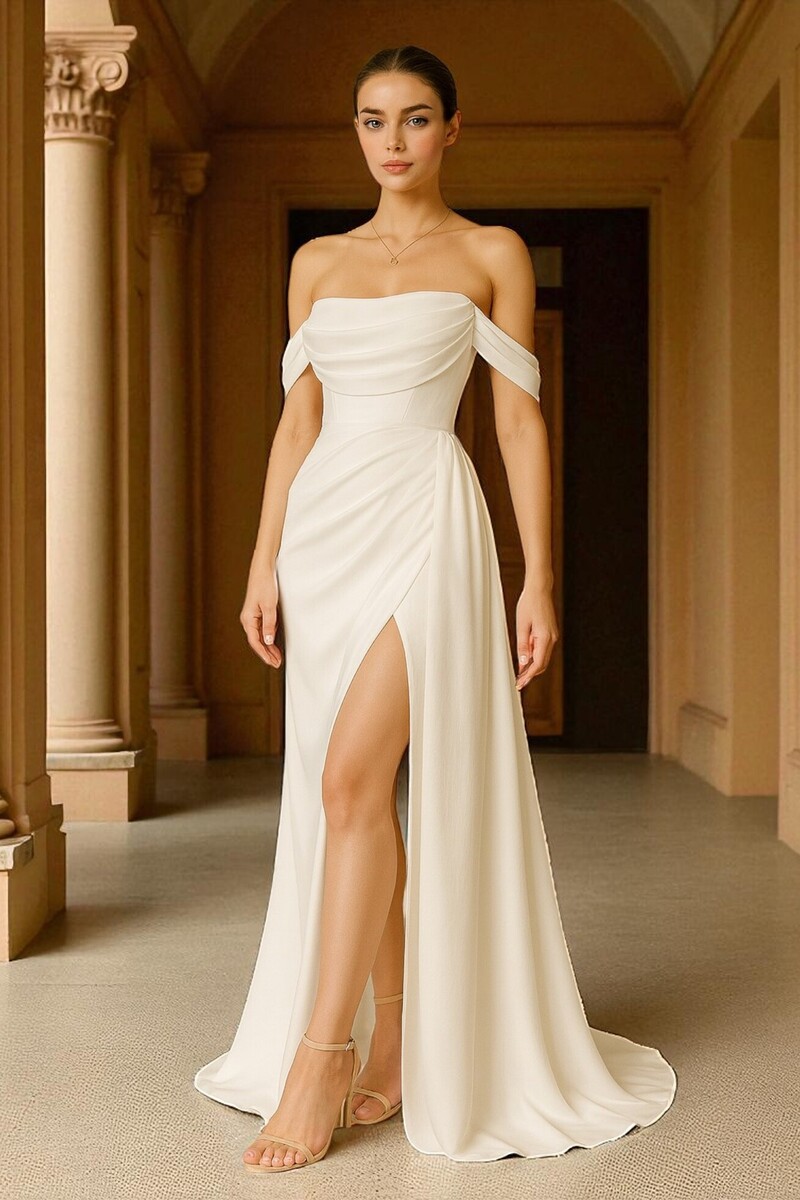
- Rusalka/gode - fits to the knee or mid-thigh, then expands. It highlights the hourglass and creates a dramatic, sculptural silhouette. It is recommended for balanced proportions; with wide hips, it requires a tight tightening base and minimal decoration in problem areas.
- Straight (column/neck) - strict vertical without pronounced expansion. It works on tall figures, but with the proper use of diagonal draperies, an asymmetric hem or a hidden belt, it visually stretches the full figure. It is often complemented with a structured jacket or cape to create a waist.
- Two-part sets is a modern response to the demand for mobility and proportion control. A separate bodice and skirt allow you to adjust the waistline, hide the belly with a loose top or, conversely, emphasize it with a shortened model. Universal for image transformation: ceremony, walk, party.
 |
 |
|
|
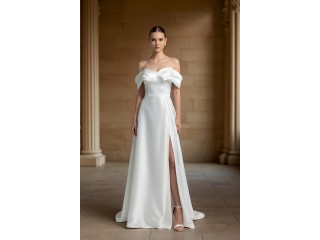
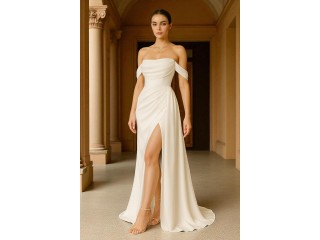
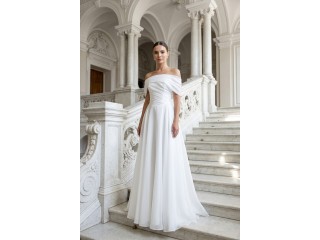
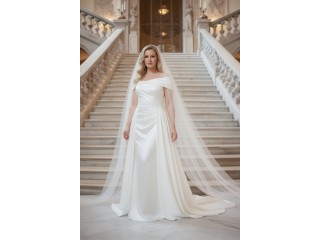
Valencia MS-1228 |
Elara MS-1220 |
|
| Learn more | Learn more |
 |