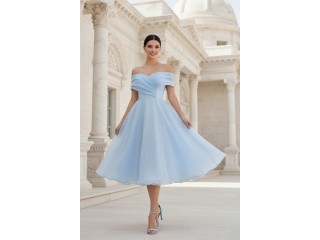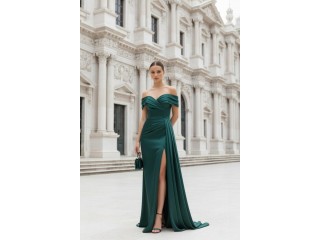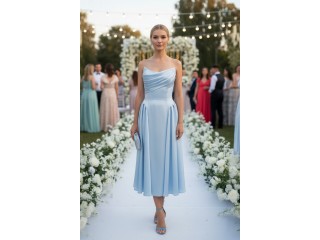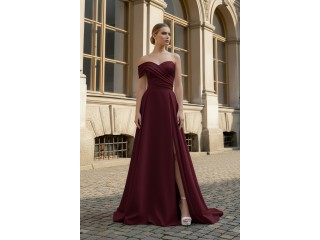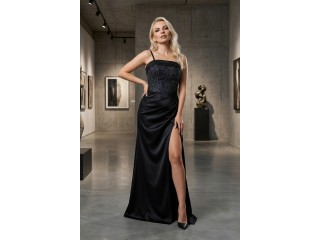
In order for your image at the celebration to be remembered for a long time, it is necessary to approach the choice systematically. Below is a proven algorithm that will turn shopping into a conscious creation of a royal silhouette."Fashion changes, style remains," repeated Coco Chanel.
Step 1. Analyze the type of figure and select the silhouette
The dress should work with your anatomy, not forcibly disguise it. Stylists operate with five basic types, each of which has its own cut."Hourglass" - balanced shoulders and hips, pronounced waist. Suitable for you: sheath dresses, "rusalka" or "gaudet" models, styles with a scent and bow belts. The main rule is not to overload the image with unnecessary details, otherwise the balance of proportions will be disrupted.
"Pear" - narrow top, lush bottom. Ideal: A-line, A-line, dresses with a V-neck and accent lantern sleeves. The task is to shift attention to the collarbone line and visually ease the hips.
"Rectangle" - shoulders, waist and hips are approximately the same width. Recommended: asymmetrical models, dresses with drapery on the side, pleated skirts, styles with contrasting inserts on the sides. Artificially creating a waistline is your main ally.
"Inverted triangle" -wide shoulders, narrow hips. Choose: sun skirts, soft pleats from the waist, open shoulders or thin drop straps. Avoid shoulder pads and bulky collars.
"Apple" -the volume of the central part, slender legs. Optimal: Empire style, high waist, loose top cut, deep V-neck. The fabric should flow, not fit.
 |
 |
|
|
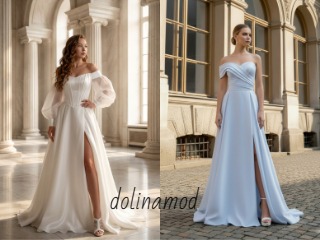
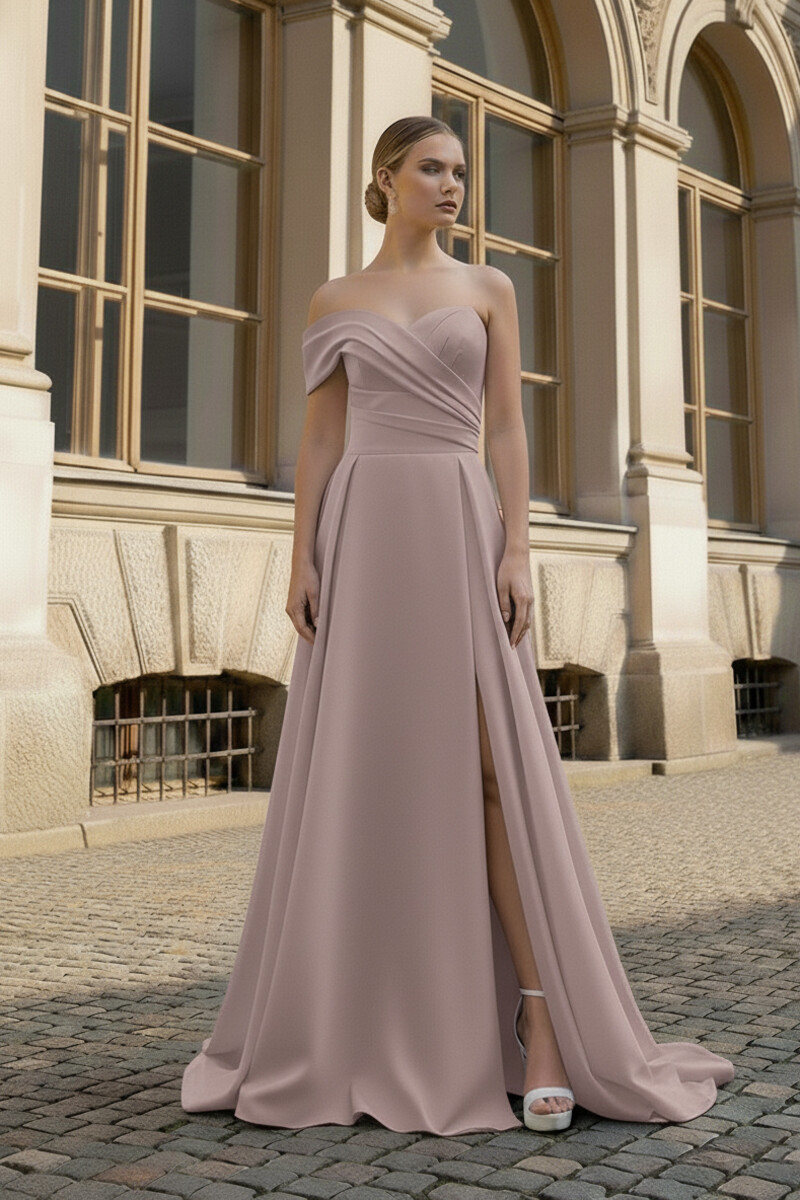
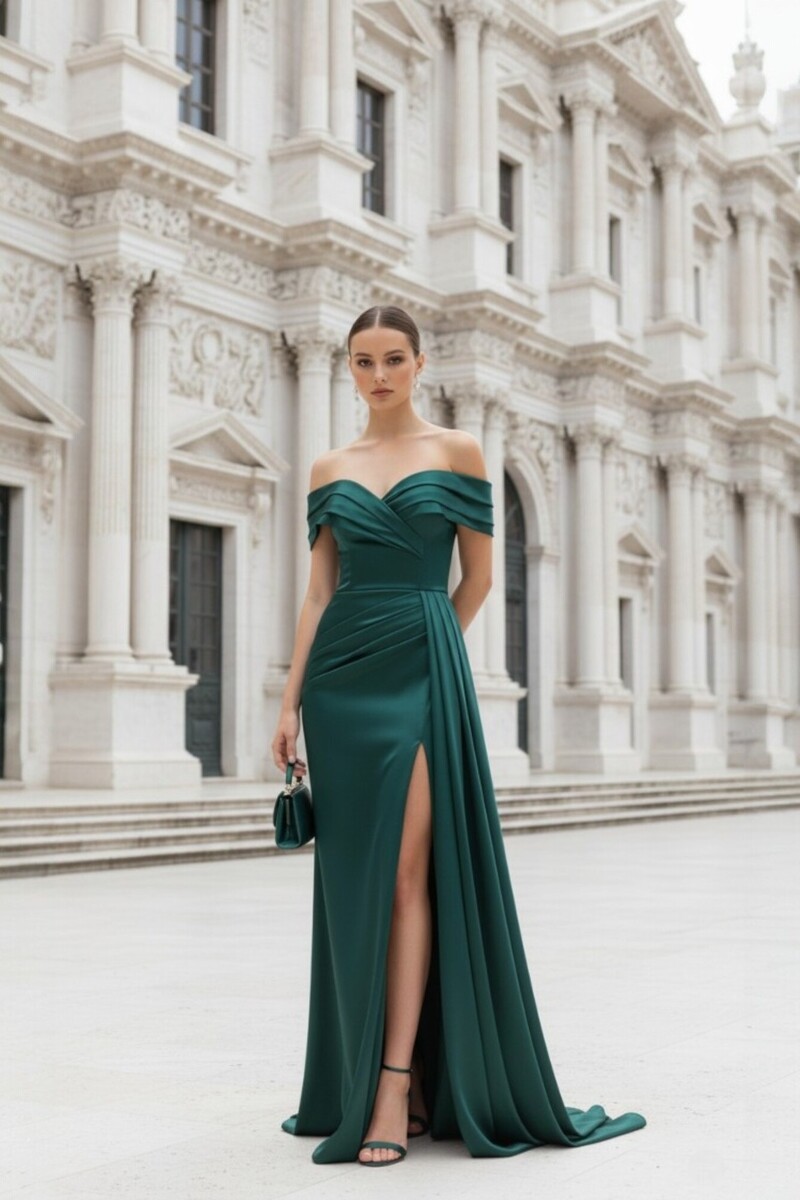
Elara DM-1220 |
Alesta DM-1218 |
|
| Learn more | Learn more |
 |
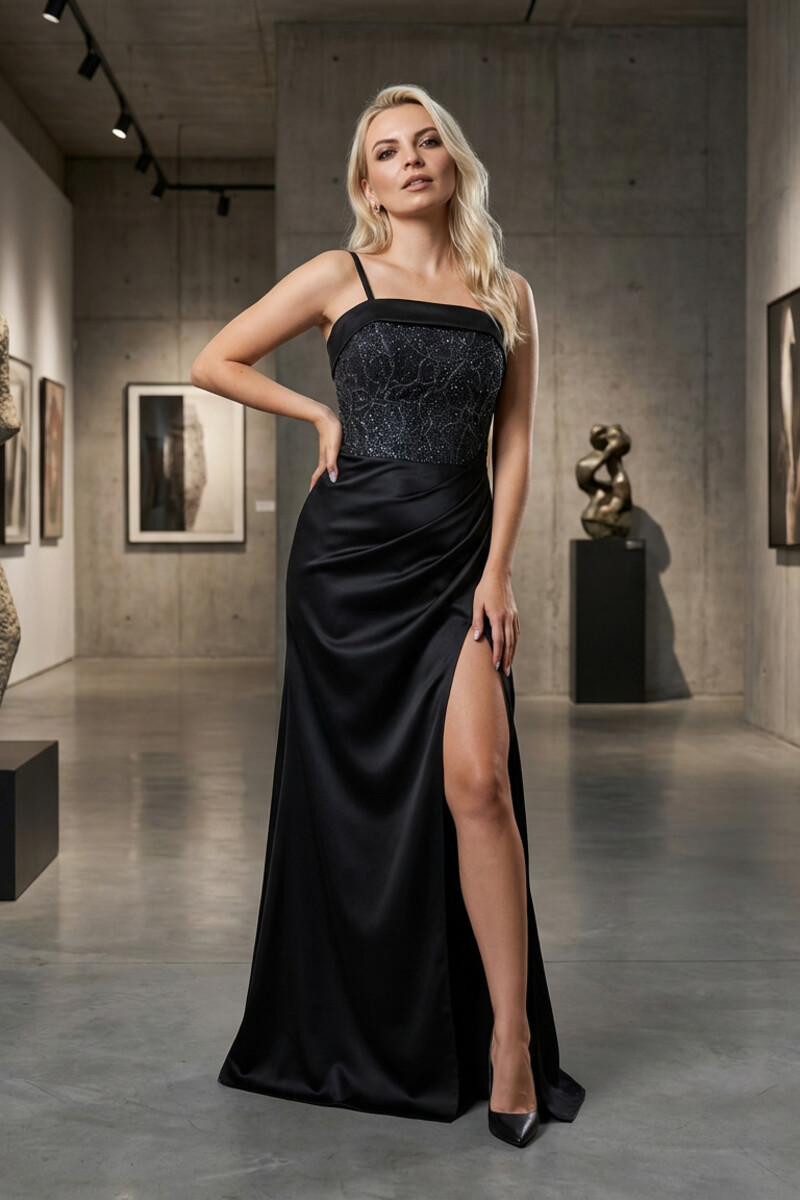 |
|
|
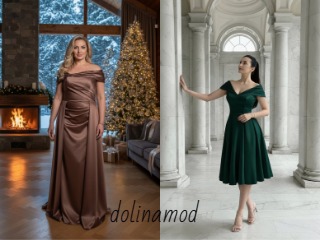
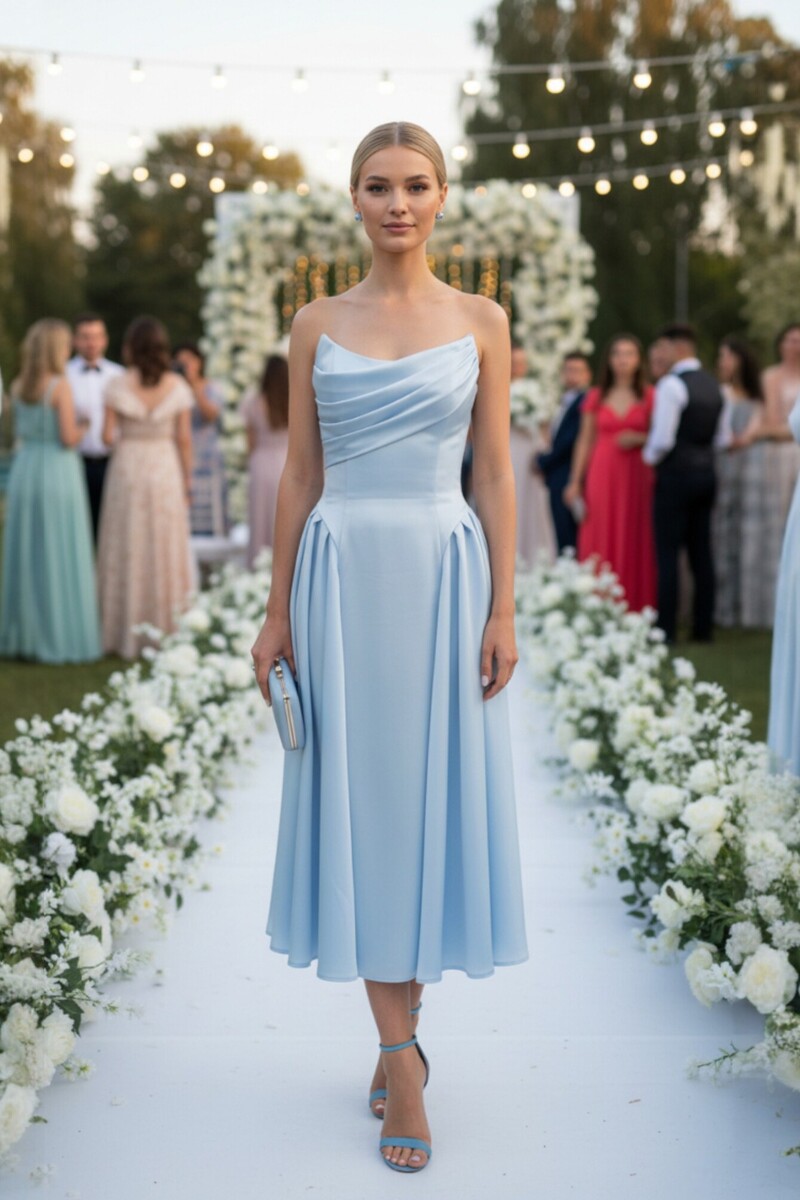
Kelly DM-1217 |
Cleo DM-1202 |
|
| Learn more | Learn more |
|
Shape type |
Recommended silhouette |
Details to avoid |
|---|---|---|
|
Hourglass |
Fitted, case, year |
Oversized, straight shirt cuts, heavy belts |
|
The pear |
A-line silhouette, trapezoid |
Tight mini skirts, horizontal prints |
|
Rectangle |
Draped, asymmetrical |
Baggy straight models without accents |
|
The first triangle |
Full skirt, soft top |
Wide shoulder pads, voluminous collars |
|
Apple |
Empire style, loose top cut |
Tight waist belts, tight tops |
Step 2. Choosing a color: harmony with the undertone and psychology of perception
Color affects how others read your image. First, determine the skin's undertone: apply a white and cream cloth to your face. If white looks brighter, you have a cold undertone, if cream - warm.
-
Warm undertone: coral, olive, terracotta, warm beige, golden metallic.
Cold undertone: emerald, sapphire, fuchsia, silver-gray, cool powdery.
- Neutral undertone: versatile, but classic black, bordeaux, deep blue and ivory look the most advantageous.
The psychology of color at the party works flawlessly: red conveys confidence and passion, black - aristocracy and distance, blue -status and tranquility, and pastel shades - romance and lightness.
Clothing is a form of non-verbal communication. Choose your dialogue consciously," said designer Diana von Furstenberg.
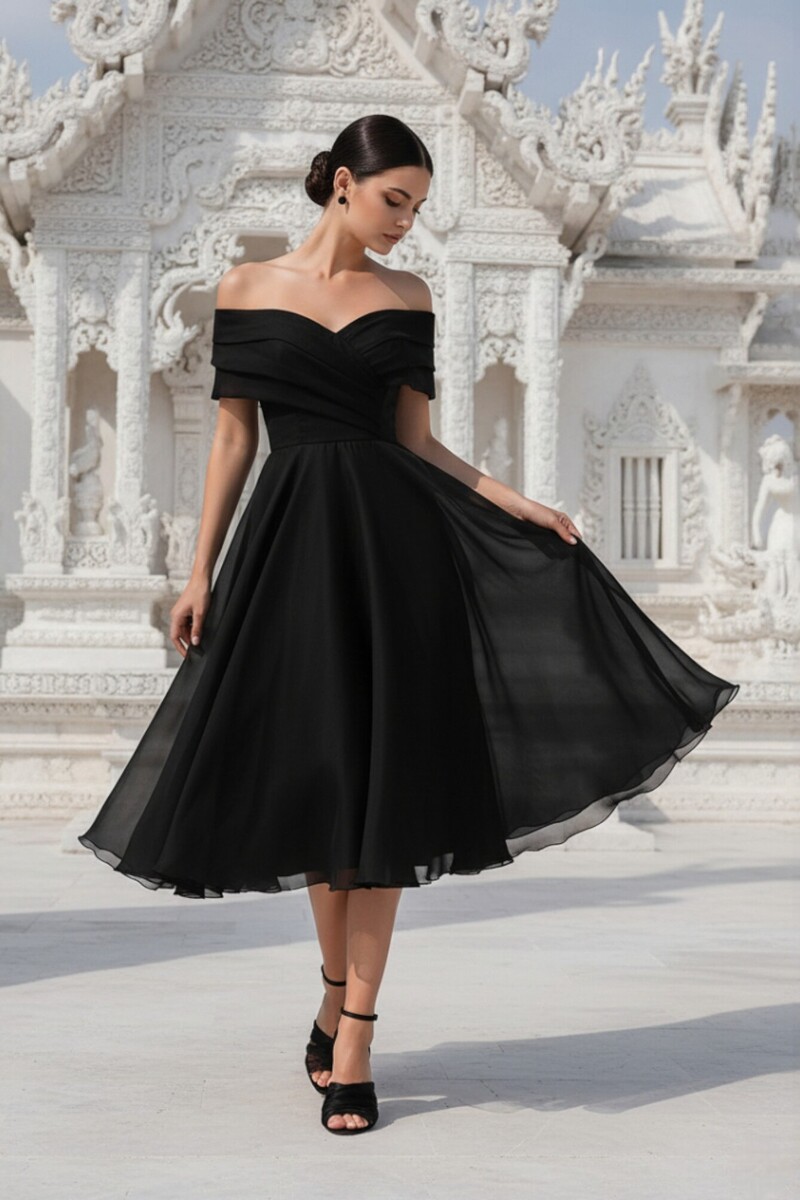 |
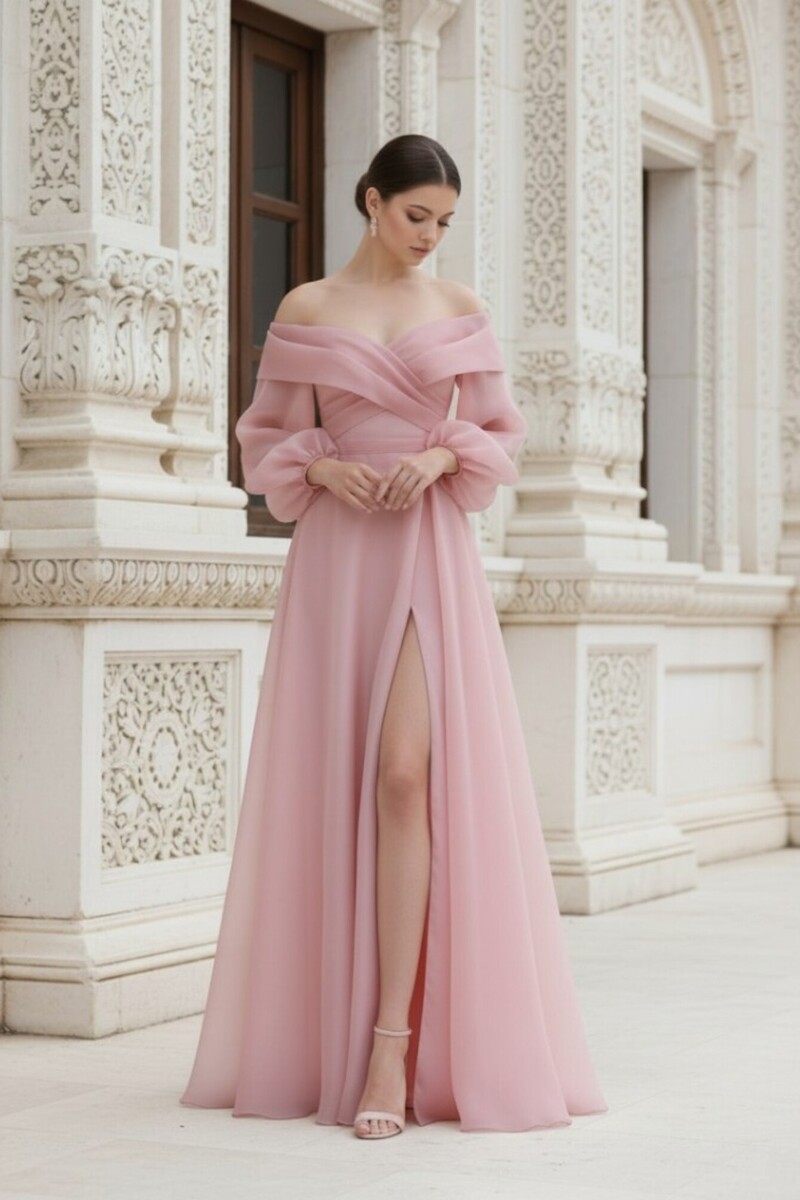 |
|
|
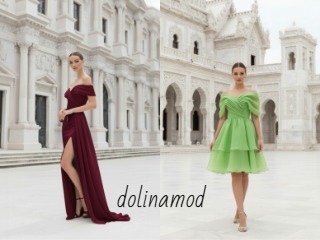
Rosalyn DM-1180 |
Alethea DM-1173 |
|
| Learn more | Learn more |
|
Event format |
Universal shades |
Trending alternatives |
Tips for combining |
|---|---|---|---|
|
Wedding (guest) |
Powdery, lavender, mint |
Champagne, muted pink |
Eliminate white, avoid total black |
|
Gala dinner |
Black, Emerald, Bordeaux |
Deep blue, chocolate |
Add one accent decoration |
|
Prom/Ball |
Pastel, metallic, sequins |
Gradients, two-color blocks |
Balance the shine with matte accessories |
Step 3. Choose a fabric: from drapery to seasonal comfort
The material determines how the dress behaves in motion, under the spotlight, and during a five-hour evening.